



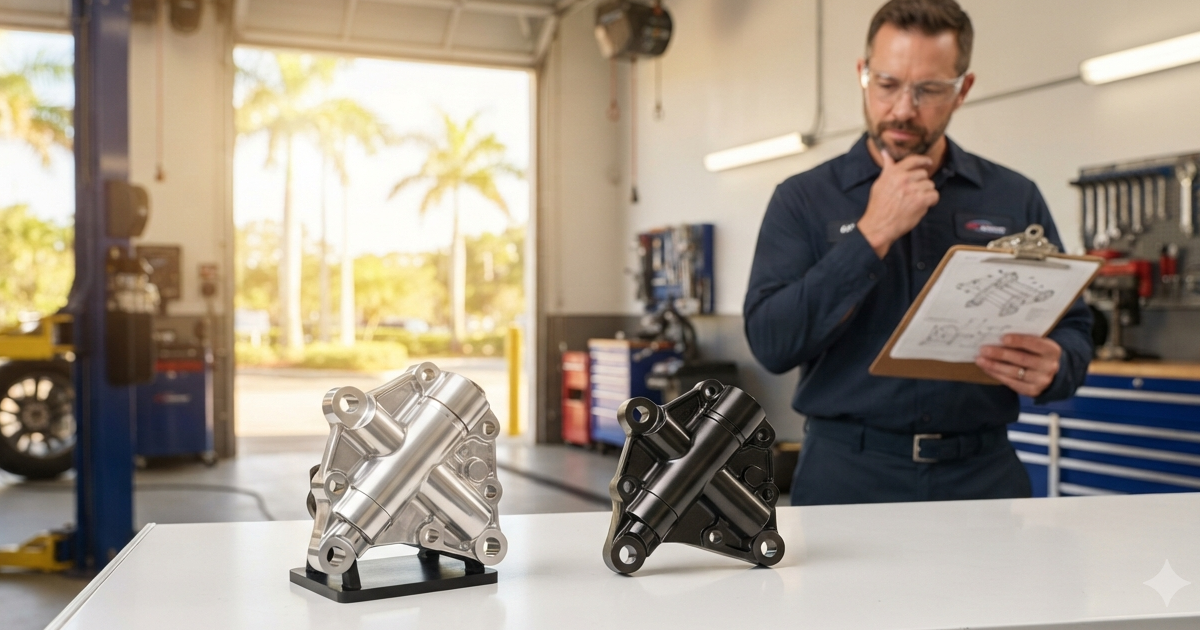

When your vehicle needs a replacement part, most drivers assume the repair shop simply orders the right component and installs it. What many Fort Myers drivers don't realize is that there's an important decision involved — one that can affect your car's performance, your warranty, and your wallet for years to come. That decision is whether to use OEM parts or aftermarket parts.
At Lou's Total Car Care on South Cleveland Avenue, we believe an informed customer is a confident customer. That's why we take the time to explain your options clearly before any repair begins. Understanding the difference between OEM and aftermarket parts helps you make the best choice for your specific vehicle, your budget, and your long-term goals as a car owner.
What Are OEM Parts?
OEM stands for Original Equipment Manufacturer. These are parts made by the same manufacturer that produced the original components installed in your vehicle when it rolled off the assembly line. In many cases, they are the exact same parts — just sold through a dealership parts department rather than packaged with a new vehicle.
When you buy an OEM part, you're essentially getting a guaranteed fit. The component was engineered specifically for your vehicle's year, make, and model. There's no guessing about compatibility, and the tolerances are designed to match the factory specifications your car was built around.
Advantages of OEM Parts
- Guaranteed fit and compatibility with your specific vehicle
- Consistent quality that matches the original factory standard
- Often come with a manufacturer warranty
- Preferred by dealerships and required for some warranty-covered repairs
- Less time spent troubleshooting fit or performance issues after installation
The Downside of OEM Parts
The most common complaint about OEM parts is cost. Because they carry the manufacturer's brand and are distributed through official channels, OEM parts typically come with a higher price tag. For older vehicles or repairs that involve multiple components, the cost difference can be significant. In some cases, OEM parts for older or discontinued models can also be difficult to source quickly, which can extend your vehicle's time in the shop.
What Are Aftermarket Parts?
Aftermarket parts are components made by third-party manufacturers — companies that are not affiliated with the original automaker. These parts are designed to fit and function like the original but are produced independently. The aftermarket parts industry is enormous, and it ranges from budget-friendly economy options all the way up to high-performance upgrades that actually exceed factory specifications.
Not all aftermarket parts are created equal, and that's an important distinction. A poorly manufactured aftermarket component can cause more problems than it solves, while a reputable aftermarket part from a trusted brand can perform just as well as — or in some cases better than — the OEM equivalent.
Advantages of Aftermarket Parts
- Typically more affordable than OEM equivalents
- Wide availability, often reducing repair time
- Large variety of options across different quality tiers and price points
- High-performance options available for drivers who want upgrades
- Competitive market drives quality improvements across leading brands
The Risks of Low-Quality Aftermarket Parts
The biggest risk with aftermarket parts is inconsistency. Because any manufacturer can produce them, quality varies widely. A bargain-priced part might look identical to the original but fail prematurely, fit poorly, or cause issues with surrounding components. This is why it matters enormously where you take your vehicle and whether the shop you trust sources its aftermarket parts from reputable suppliers.
At Lou's Total Car Care, we are highly selective about the aftermarket parts we use. We work with trusted suppliers and well-known brands with proven track records, so when we recommend an aftermarket option, it's because we've vetted it and stand behind it.
How Lou's Total Car Care Helps You Make the Right Choice
The honest answer is that the best choice between OEM and aftermarket depends on several factors unique to your situation. A one-size-fits-all answer doesn't exist, and any shop that tells you otherwise isn't giving you the full picture.
Factors We Consider Together
- Vehicle age: For a newer vehicle still under manufacturer warranty, OEM parts may be the smarter choice to protect your coverage. For an older high-mileage vehicle, a quality aftermarket part may offer excellent value.
- Type of repair: Some repairs — particularly safety-critical ones involving brakes, steering, or suspension — call for parts with the highest confidence in quality and fit. Others, like certain body components or interior trim, offer more flexibility.
- Your budget: We respect that every driver has financial realities. We'll never push you toward a more expensive option unless we have a genuine reason to believe it's in your best interest.
- Availability and turnaround: In some cases, aftermarket parts can get your vehicle back on the road faster. In Southwest Florida, getting you back behind the wheel quickly matters — especially when your car is your lifeline in the summer heat.
We walk every customer through these considerations before any repair is authorized. Our goal is never to upsell you — it's to give you honest information and let you make the decision that's right for you. That's what it means to be a family-owned shop that genuinely cares about the people we serve.
Why It Matters Where You Get Your Parts Installed
Even the best part in the world is only as good as the installation. Improper installation of either an OEM or aftermarket component can lead to premature failure, safety issues, and unnecessary additional repairs. At Lou's Total Car Care, our experienced technicians follow proper procedures for every repair, using the right tools and techniques to ensure that whatever part goes into your vehicle is installed correctly the first time.
We also stand behind our work. If something isn't right after a repair, we want to know about it — and we'll make it right. That level of accountability is harder to find at a chain repair shop where the technician who worked on your car today might not even be there next week.
If you have questions about an upcoming repair or want to understand your options before authorizing any work, give us a call at (239) 278-1682 or stop by our shop at 4531 S Cleveland Ave, Fort Myers, FL 33907. At Lou's Total Car Care, you'll always get a straight answer from someone who genuinely has your best interest at heart.