



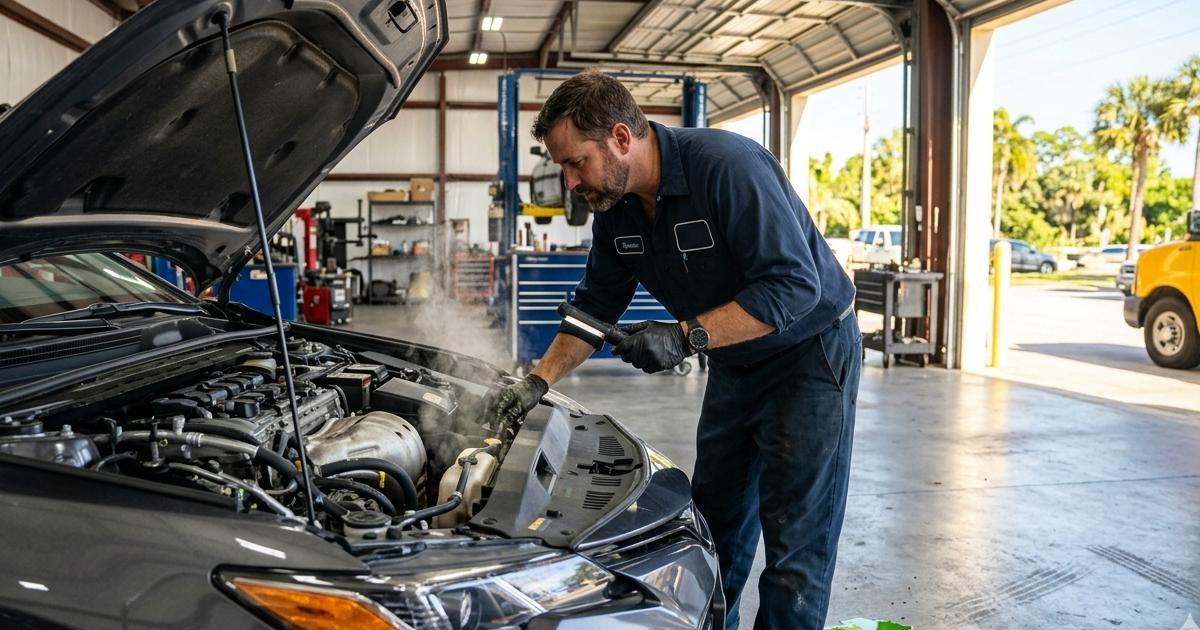

In the relentless heat of Southwest Florida, your vehicle's cooling system isn't just a convenience — it's the difference between arriving at your destination and being stranded on the side of US-41 with smoke billowing from under your hood. Coolant, also known as antifreeze, is the lifeblood of your engine's temperature regulation system, and a slow leak can quickly spiral into one of the most expensive repairs a vehicle owner can face. The good news? Coolant leaks almost always give you warning signs before they become catastrophic failures. Knowing what to look for can save you hundreds — sometimes thousands — of dollars and keep you safely on the road.
What Does Coolant Actually Do?
Before diving into the warning signs, it helps to understand why coolant is so critical, especially for drivers in Fort Myers and the surrounding areas of Southwest Florida. Your engine generates an enormous amount of heat when it runs. Coolant circulates through the engine block, absorbing that heat, and then travels to the radiator where the heat is released into the air. Without sufficient coolant, engine temperatures skyrocket, causing metal components to warp, seals to fail, and in worst-case scenarios, the engine to seize entirely — a repair that can easily exceed the value of many vehicles.
In our region, ambient temperatures regularly climb into the 90s and beyond, which means your cooling system works harder than it would in cooler climates. Even a small coolant leak that might go unnoticed in Minnesota can cause real trouble in Fort Myers during the peak of summer. That's why catching a leak early is absolutely essential for local drivers.
Warning Signs That Your Vehicle May Have a Coolant Leak
Coolant leaks can originate from multiple points in your cooling system, including the radiator, hoses, water pump, heater core, or head gasket. Regardless of where the leak is coming from, your vehicle will usually give you several clues that something is wrong. Here are the most common warning signs to watch for:
Puddles Under Your Vehicle
One of the most obvious signs of a coolant leak is finding a puddle under your parked vehicle. Coolant is typically a bright green, orange, pink, or yellow color depending on the type used in your vehicle. It has a slightly sweet smell that distinguishes it from other automotive fluids. If you notice a colored puddle that doesn't look like plain water or dark oil, it's time to get your vehicle inspected right away. Keep in mind that on a hot day, your air conditioning system does produce condensation that drips clear water, so not every puddle is cause for alarm — but colored fluid definitely warrants attention.
Your Temperature Gauge Climbing Higher Than Normal
Your dashboard temperature gauge is your first line of defense. If you notice the needle creeping higher than its normal operating range, that's a direct signal that your engine is running hotter than it should. A coolant leak reduces the amount of fluid available to regulate engine temperature, causing heat to build up faster than it can be dissipated. Never ignore a rising temperature gauge — if it reaches the red zone, pull over safely and turn off your engine immediately. Continuing to drive an overheating vehicle can cause catastrophic and irreversible engine damage.
A Sweet Smell Coming From Your Engine or Vents
Coolant has a distinctively sweet, slightly chemical odor. If you begin to smell something sweet coming from under your hood or through your vehicle's air vents, it could mean coolant is leaking onto hot engine components or entering the heater core. This smell is often one of the earliest indicators of a developing leak, sometimes appearing before you see any visible puddles or notice a gauge change.
White Smoke or Steam From Under the Hood
If coolant is leaking onto hot engine parts, it will evaporate quickly, producing white smoke or steam. You might also notice white or grayish smoke coming from your exhaust pipe, which can indicate a more serious internal leak such as a failing head gasket where coolant is entering the combustion chamber. Either scenario demands immediate professional attention.
Your Coolant Reservoir Level Keeps Dropping
Most vehicles have a translucent coolant reservoir tank that allows you to check the fluid level without opening the radiator cap. If you check your coolant level regularly and notice it keeps dropping between services without an obvious external puddle, you may have a slow internal leak or a small external leak that evaporates quickly in the Florida heat before it reaches the ground. A consistently low coolant level is never something to ignore.
Common Causes of Coolant Leaks in Southwest Florida Vehicles
Understanding what causes coolant leaks can help you be more proactive about prevention. In our region, several factors make cooling system leaks more likely than in other parts of the country:
- Deteriorating Hoses: The intense heat in Southwest Florida accelerates rubber degradation. Radiator hoses and heater hoses can crack, swell, or become brittle over time, leading to small leaks that quickly worsen.
- Radiator Corrosion: Over time, the inside of your radiator can corrode, particularly if coolant hasn't been changed on a proper schedule. Corrosion creates small holes and weak spots that allow coolant to seep out.
- Water Pump Failure: The water pump is responsible for circulating coolant throughout the system. A worn pump seal or bearing can allow coolant to leak from the pump housing.
- Loose or Failed Hose Clamps: The clamps that secure coolant hoses to the radiator and engine can loosen or corrode, allowing coolant to escape at the connection points.
- Head Gasket Failure: This is the most serious type of coolant leak. The head gasket seals the engine block to the cylinder head, and when it fails, coolant can mix with engine oil or enter the combustion chamber. This repair is costly but absolutely necessary to prevent total engine failure.
- Cracked Radiator: Physical damage from road debris or simple age can cause cracks in plastic radiator tanks, leading to significant coolant loss.
How Fort Myers Heat Accelerates the Problem
Every component in your cooling system — hoses, gaskets, seals, and the radiator itself — ages faster in our climate than in cooler regions. The combination of year-round high ambient temperatures, intense direct sunlight, and the frequent short trips that many Fort Myers residents take (which don't always allow the cooling system to fully cycle) creates the perfect storm for premature cooling system wear. Being proactive about cooling system inspections isn't just smart — it's essential for anyone driving in Southwest Florida.
What to Do If You Suspect a Coolant Leak
If you notice any of the warning signs described above, the best thing you can do is bring your vehicle to a trusted local shop as soon as possible. Do not wait and hope the problem resolves itself — coolant leaks do not heal on their own, and they will always get worse over time. At Lou's Total Car Care on South Cleveland Avenue in Fort Myers, our experienced technicians will perform a thorough inspection of your entire cooling system to identify the source of the leak, assess the condition of all related components, and recommend the most effective and cost-efficient repair.
From replacing a worn hose to performing a full radiator replacement or head gasket repair, Lou's Total Car Care handles it all with the honest service and fair pricing that Fort Myers drivers have come to rely on. We work on every make and model, and our goal is always to get you back on the road safely and quickly. Don't wait until a small leak turns into a major breakdown — give us a call at (239) 278-1682 or stop by our shop at 4531 S Cleveland Ave, Fort Myers, FL 33907. Your engine will thank you for it.