




If there is one maintenance task that every vehicle owner in Fort Myers has heard about, it is the oil change. Yet despite its reputation as the most basic and essential service a car needs, oil changes are also one of the most commonly delayed or skipped services on the road today. Life gets busy, the reminder sticker on the windshield gets ignored, and before you know it, you are thousands of miles past due. But what is actually happening inside your engine during that time? The answer might surprise you — and it might change how seriously you take your next oil change appointment.
At Lou's Total Car Care on South Cleveland Avenue in Fort Myers, our team sees the consequences of neglected oil changes more often than you might expect. From sludge buildup to catastrophic engine failure, the damage caused by old, degraded oil is very real — and very expensive to fix. Understanding what oil actually does inside your engine is the first step toward protecting your investment and keeping your vehicle running for years to come.
What Engine Oil Actually Does
Most drivers know that oil keeps the engine lubricated, but that only scratches the surface of what this critical fluid is responsible for. Modern engine oil is a carefully engineered blend of base oils and additives designed to perform multiple jobs simultaneously inside your engine.
Lubrication and Friction Reduction
Your engine contains hundreds of moving metal parts that operate at extremely high speeds and temperatures. Without a thin film of oil separating these components, metal-on-metal contact would quickly grind them down, generating heat and causing irreversible wear. Engine oil creates that critical protective barrier, allowing parts like pistons, crankshafts, camshafts, and valve train components to move freely without destroying each other in the process.
Heat Transfer and Cooling
Your coolant system handles the bulk of engine cooling, but oil plays a significant supporting role. As it circulates through the engine, oil absorbs heat from hot components and carries it away, helping to regulate temperatures in areas that coolant cannot easily reach. This function becomes even more critical for Fort Myers drivers, where ambient temperatures and stop-and-go traffic already push engine temperatures higher on a daily basis.
Cleaning and Sludge Prevention
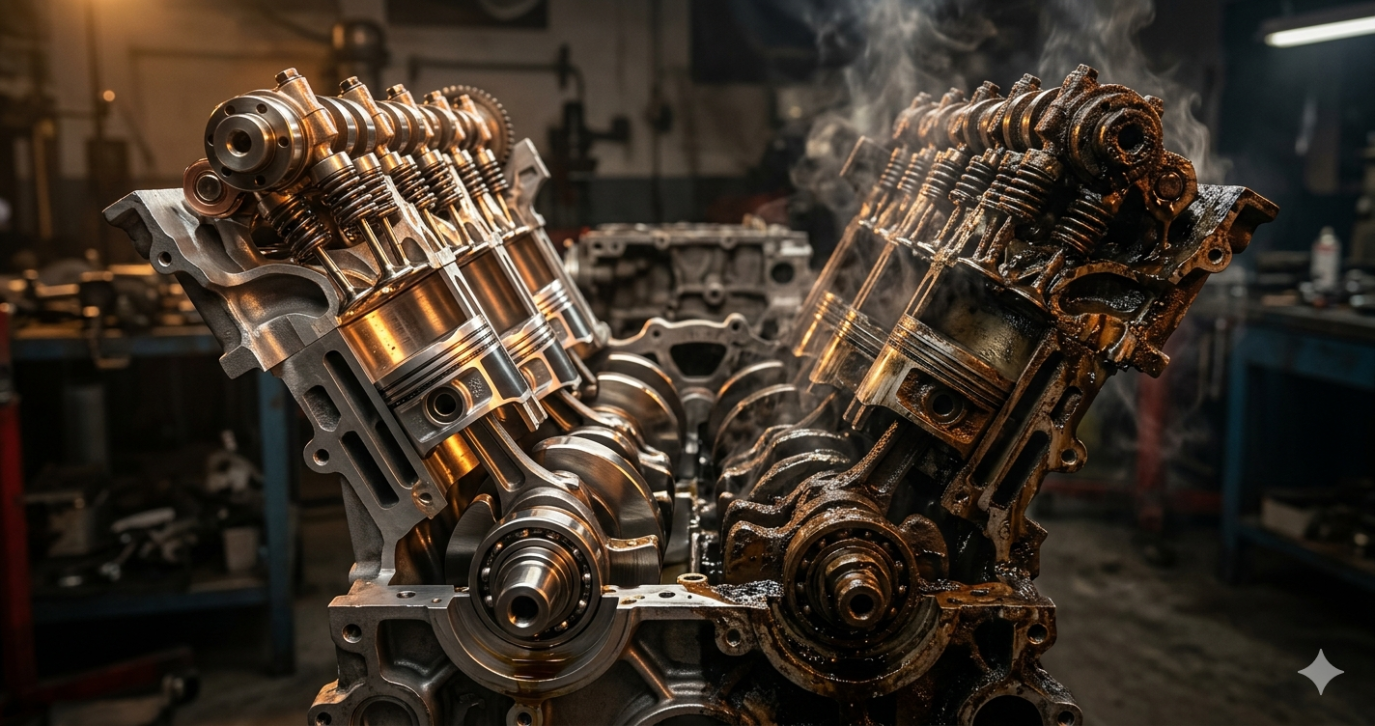
Fresh engine oil contains detergent additives specifically designed to suspend microscopic dirt, metal particles, and combustion byproducts, carrying them to the oil filter where they are trapped and removed from circulation. This cleaning action is what keeps your engine internals clean over time. When oil breaks down and loses its detergent properties, those contaminants are no longer suspended — they begin to settle on engine surfaces and bake into thick, tar-like sludge that can block oil passages and starve components of lubrication.
What Happens Step by Step When You Skip Oil Changes
The degradation of engine oil does not happen all at once. It is a gradual process, and each stage brings new risks to your engine's health. Understanding the timeline helps illustrate why staying on top of oil changes is so much more than just a suggestion.
Early Degradation: The Additives Break Down First
Long before your oil turns completely black and thick, its protective additive package begins to deplete. Antioxidants, anti-wear agents, detergents, and viscosity modifiers all degrade over time through heat cycling and chemical reactions inside the engine. Once these additives are gone, the base oil is left without the protection it needs to do its job effectively. This phase often happens quietly with no obvious symptoms, which is why it is so easy to overlook.
Increased Engine Wear
As the oil's lubricating properties decline, metal surfaces that should never touch begin to experience increased friction. This accelerated wear affects bearings, cylinder walls, piston rings, and valve train components. While this wear may be invisible from the outside, it is steadily shortening your engine's lifespan with every mile driven on degraded oil. Over time, this cumulative wear leads to loss of compression, increased oil consumption, and reduced engine performance.
Sludge Formation and Oil Passage Blockages
This is where things get serious. Once oil has fully broken down, it begins to oxidize and thicken into sludge. This gel-like material coats internal engine surfaces and, critically, can begin to clog the small oil passages that deliver lubrication to vital components. When oil cannot reach a bearing or camshaft lobe, that component is essentially running dry. The damage that follows can happen very quickly and is often not repairable without a full engine rebuild or replacement.
Overheating and Thermal Failure
With degraded oil unable to transfer heat effectively and clogged passages reducing oil circulation, engine temperatures begin to climb. In Southwest Florida's already hot climate, this is a recipe for disaster. Overheating can warp cylinder heads, blow head gaskets, and cause catastrophic internal damage that renders the engine unrepairable. What started as a skipped oil change can end with a four-figure or five-figure repair bill — or a total engine replacement.
How Often Should Fort Myers Drivers Really Change Their Oil?
The old rule of thumb was every 3,000 miles, but modern vehicles and synthetic oils have changed the equation. The right answer depends on several factors specific to your vehicle and driving conditions.
Conventional vs. Synthetic Oil
Conventional motor oil typically holds up well for 3,000 to 5,000 miles before degradation becomes a concern. Full synthetic oil, on the other hand, is engineered to resist breakdown for much longer — typically 7,500 to 10,000 miles or more, depending on the vehicle and manufacturer recommendations. Many newer vehicles are factory-filled with synthetic oil and have extended change intervals as a result. Always consult your owner's manual for the manufacturer's recommendation for your specific vehicle.
Fort Myers Driving Conditions Matter
Your driving environment plays a significant role in how quickly your oil degrades. Factors that accelerate oil breakdown include:
- Frequent short trips where the engine never fully warms up
- Extended idling in traffic, which is common during Fort Myers rush hours
- High ambient temperatures that add heat stress to the oil
- Towing or hauling heavy loads
- Stop-and-go city driving as opposed to steady highway miles
If your daily driving involves several of these conditions — which is true for many Fort Myers residents — you may benefit from changing your oil on the shorter end of the recommended interval rather than pushing it to the maximum mileage.
Trust the Professionals at Lou's Total Car Care
One of the simplest ways to stay on track with oil changes is to build a relationship with a trusted local shop. When you bring your vehicle to Lou's Total Car Care at 4531 S Cleveland Ave in Fort Myers, our team checks your vehicle's history, considers your driving habits, and recommends the right oil type and change interval for your specific situation. We never push unnecessary services, but we will always be honest with you about what your vehicle actually needs to stay protected.
We work on every make and model, use quality oil products and filters, and get you in and out efficiently so a quick oil change never feels like a burden. And because we are a family-owned shop that truly cares about our customers, you can trust that our recommendations are always in your best interest — not designed to upsell you on services you do not need.
The Bottom Line on Oil Changes
Engine oil is not glamorous, and an oil change does not feel as urgent as a brake job or a transmission repair. But in terms of long-term engine health, nothing you do for your vehicle has a greater impact than keeping fresh, clean oil circulating through the engine. The cost of a regular oil change is minimal. The cost of an engine damaged by neglect is enormous.
Do not wait until your oil light comes on or your engine starts making noise to take action. By that point, damage may already be done. Stay proactive, follow your manufacturer's recommendations, and trust a local team that knows how to care for your vehicle in the specific conditions of Fort Myers and Southwest Florida.
Give Lou's Total Car Care a call at (239) 278-1682 or stop by our shop on South Cleveland Avenue to schedule your next oil change. We are here to keep your engine clean, your car running strong, and your wallet protected from the kind of costly repairs that start with something as simple as skipping a service.